The Piccolo connection
starts at the drawing board.
The resemblance is not something the audience imagined after the fact. It belongs to the character’s documented conception.
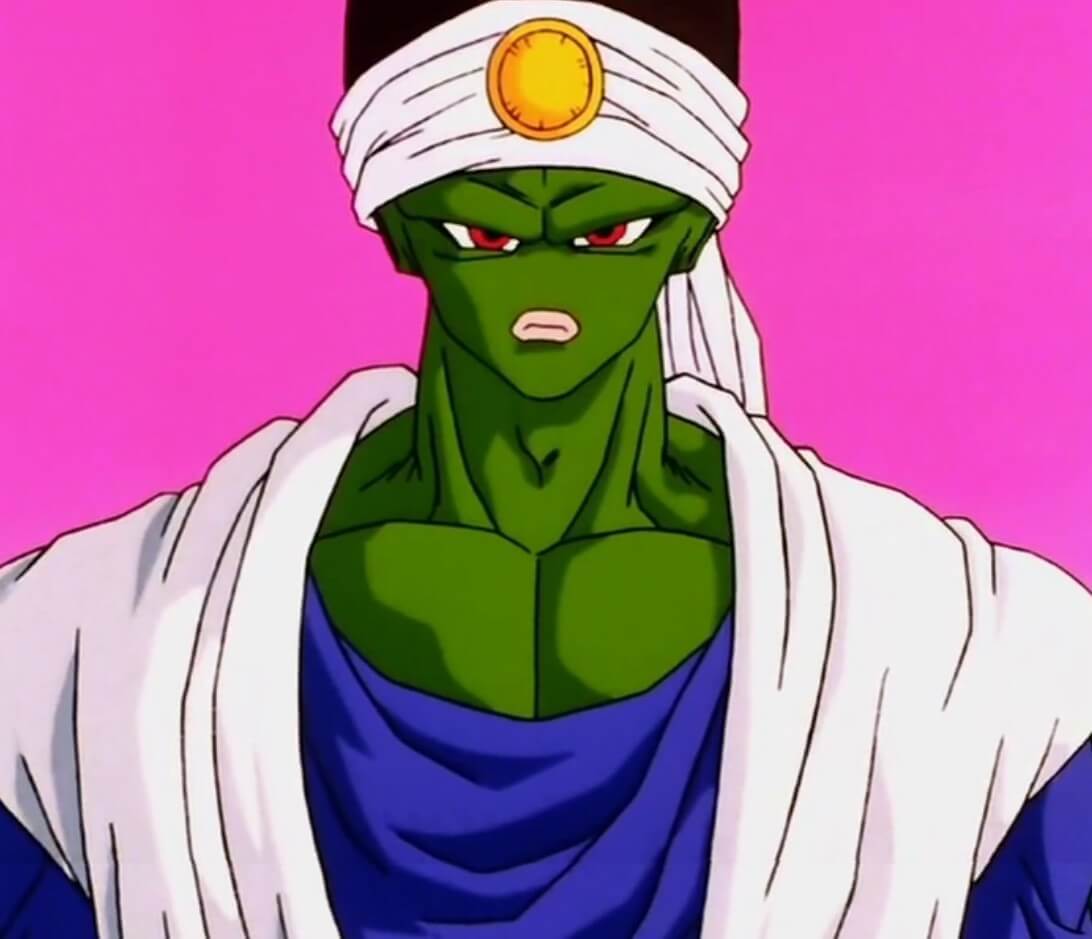
TV Anime Guide: Dragon Ball Z Son Goku Densetsu reproduces Pikkon in its collection of Toriyama’s anime designs. The caption on page 136 describes him as a “Piccolo-type” character and reports an anime production memo directing that his facial expressions be based on Piccolo.[1]
“Piccolo-type”Guidebook caption accompanying Toriyama’s Pikkon design.
Son Goku Densetsu, p. 136; accessible English transcription.[1]
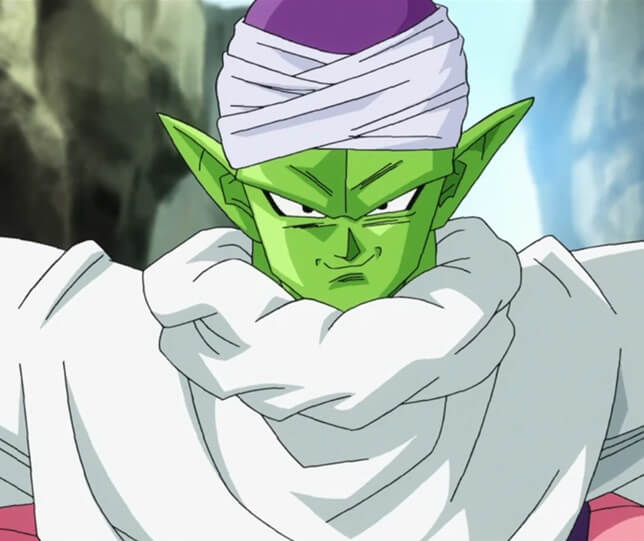
That is much more specific than “a stern fighter” or “another alien.” The chosen reference is Piccolo: the franchise’s unmistakable Namekian warrior. The connection reaches into the face itself, the part of a character design through which an audience recognizes identity.
The phrase does not have to be treated as a secret dictionary definition to matter. Its force is straightforward: the Namekian resemblance is an intended feature of the design, not an accidental similarity that must be explained away. An argument that begins by reducing Pikkon to “some random green alien” has already discarded the most specific production evidence.
The character was not merely drawn green. He was built in relation to a particular Namekian.
“Piccolo analogue” is not a species rebuttal.
A frequent response is that Pikkon was simply designed to fill Piccolo’s role. But that does not answer the question. Analogue describes a creative function. Namekian describes an identity. The two are perfectly compatible.
To refute Namekian identity, the production comparison would need to establish a contrast: Piccolo-like, but explicitly of another people. The cited caption supplies the first part. It does not supply the second. Adding that exclusion is an interpretation, not something written in the source.
The resemblance is
part of the storytelling.
The design does not sit in a vacuum. The finished character carries the connection into the story.
The official Dragon Ball website’s Pikkon profile explicitly recalls Goku comparing him to Piccolo. It also describes his grave, disciplined bearing and the weighted uniform he discards before revealing his full fighting ability.[2]
These details belong together. The white outer garments, severe face, controlled manner, and concealed power form a recognizable character package. Pikkon does not merely share a color with Piccolo. He is presented through a cluster of Piccolo associations, with the comparison acknowledged inside the story itself.
The recognizable silhouette
Look at the portraits: green skin, a sharply defined face, white headwear, and a broad white outer garment. The comparison concerns the whole arrangement, not a single swatch of color.
The explicitly named reference
Goku’s Piccolo comparison makes the association part of the narrative record—not just a resemblance noticed by viewers.[2]
The power behind the clothing
The official Pikkon profile recounts the weighted-uniform reveal. Official coverage of Piccolo likewise celebrates his turban-and-cape removal before battle.[2][7]
A variation on the Namekian model
The affirmative reading treats this coordinated design as meaningful. Pikkon has his own face, techniques, and personality without needing to belong to an entirely unrelated species.
Character identity is communicated through combinations, not isolated checkboxes. The costume reinforces the face; the narrative comparison reinforces the production reference. The point is the coordinated design. Picking it apart into unrelated details removes the very pattern the audience is being shown.
The objection “other characters can do that too” only defeats a claim of exclusivity. It does not erase the deliberate pattern. A familiar identity can be communicated through an arrangement of familiar details.
Namekian is a people.
Not a postal address.
“He represents the West Galaxy” is not an answer to “What is he?”
The old geographic objection assumes that Namekians belong exclusively to Planet Namek. Dragon Ball Super chapter 69 destroys that premise. Muri describes the Namekians’ migration into this universe from another realm and says that some established themselves far from Planet Namek. The official Dragon Ball website reproduces the panel and explains its significance.[3]
“…some settled in placesMuri, in the official website’s English rendering of the manga dialogue.[3]
far from Planet Namek.”
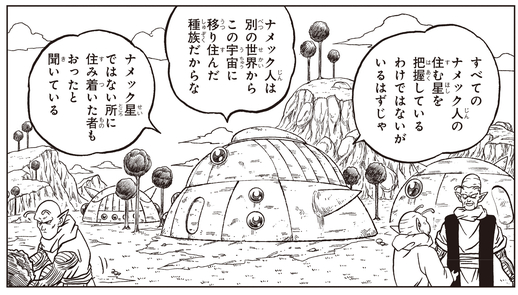
Monaito supplies the concrete example: a Namekian living on Planet Cereal. The official article specifically distinguishes membership in the Namekian people from residence on Planet Namek.[3] A geographic affiliation cannot do the work of a species identification.
That changes the argument from “perhaps Namekians could exist elsewhere” to “the source material expressly says they do.” No invented exodus, special rescue mission, or elaborate off-screen journey is needed to defeat the claim that the West Galaxy rules Pikkon out.
The chapter does not need to mention Pikkon to dispose of a universal geographic prohibition. Namekian life beyond Namek is part of the setting. The “wrong galaxy” objection fails on its own terms.
A map can tell you where someone belongs.
It cannot, by itself, tell you what they are.
Namekian ancestry is
not a photocopier.
The missing antennae are the standard objection. The series gives us a reason not to turn a standard appearance into an absolute law.
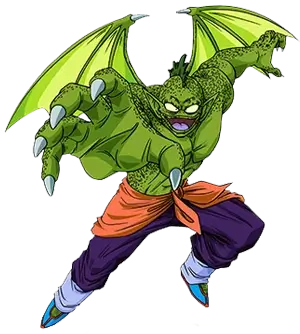
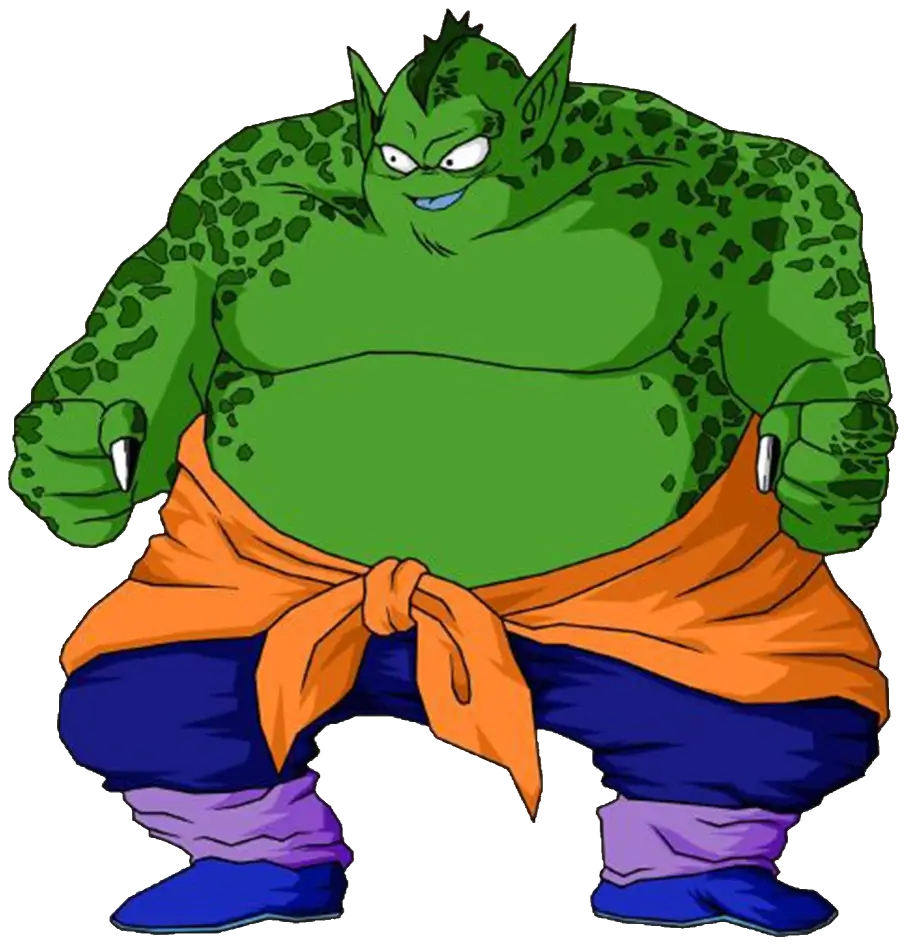
Start with something stronger than speculation: Piccolo Daimaō’s offspring. The original manga shows Cymbal hatching from his egg; the official Cymbal profile reproduces the relevant chapter 137 material. The official Tambourine profile likewise identifies him as a warrior produced through the Demon King’s egg-laying physiology.[4][5]
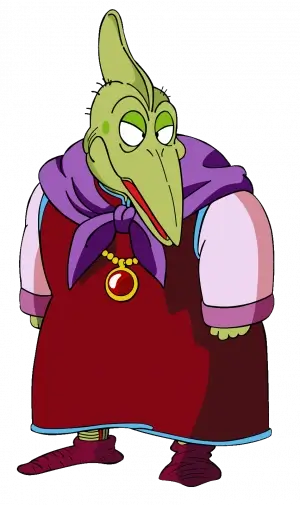
These creatures plainly do not look like ordinary villagers on Namek. That is the point. A Namekian parent can produce offspring whose appearance departs radically from the familiar humanoid model. Calling them members of the Demon Clan does not erase the origin the story actually depicts.
 Piano
PianoView image ↗
 Tambourine
View image ↗
 Cymbal
View image ↗
 Drum
DrumView image ↗
The original comparison gallery, retained for the visual argument. These are Demon Clan forms—not a claim that ordinary Namekian villagers routinely look like this. The official profiles document the brood’s origin and distinctive appearances.[4][5][6]
An exception is enough to defeat an absolute.
The claim “every being of Namekian origin must have this exact anatomy” is a universal claim. It needs more than the observation that the most familiar Namekians look alike. The Demon King’s brood demonstrates why that shortcut fails.
This does not require making Pikkon a secret son of Piccolo Daimaō. No such family tree is needed here. The relevant distinction is between not matching the usual appearance and being impossible within the lineage. Critics routinely jump from the first to the second without supplying the missing rule.
Pikkon’s differences are real. His documented connection to Piccolo is real too. A serious reading weighs both. It does not declare one missing feature an automatic veto and then ignore the entire affirmative case.
“He does not look exactly like Piccolo” is an observation.
“Therefore he cannot be Namekian” is an extra claim.
An analogue and a Namekian
are not competing answers.
One describes the storytelling. The other identifies the character. Both can be true.
Calling Pikkon a “Piccolo analogue” describes how he was constructed. It does not establish that he belongs to another species. The production caption supplies a specific Namekian model; it does not supply the word only or a biological disclaimer.[1] The objection manufactures an opposition where none is required.
“A Piccolo analogue.”
Explains the reference point used to build and present Pikkon. It does not, on its own, say which people he belongs to.
“A Namekian warrior.”
Takes the recognizable Namekian model seriously as identity, while allowing an individual character to differ from Piccolo.
Our case is that the second reading best follows the character actually placed in front of us. It keeps the intended resemblance, the narrative comparison, and the established flexibility of Namekian origins in one coherent picture. It does not require turning the absence of a label into an instruction to disregard the design.
The guidebook links the design and facial reference to Piccolo. The association was part of the construction of the character.[1]
The official profile preserves Goku’s Piccolo comparison. The association survives into the finished story.[2]
The manga establishes settlements away from Planet Namek. Geographic distance cannot supply the exclusion critics want.[3]
The evidence does different jobs. The production history establishes the deliberate model. The story reinforces it. The lore answers the alleged exclusions. Read together, these are the parts of one sustained affirmative case.
That is precisely why isolating each point and demanding that it single-handedly prove everything misses the argument. The production reference gives the resemblance weight. The finished presentation sustains it. The world-building removes the supposed geographic barrier. The bodily precedent challenges an exceptionless visual checklist.
The resulting reading is not an exotic invention. It is the familiar identity communicated by the character’s own creative vocabulary: a Namekian, with an individual design.
The usual rebuttals
do not close the case.
An unanswered biographical question is not the same thing as evidence for a different species.
“But nobody calls him Namekian.”
A character is more than an infobox. The absence of an explicit species label is acknowledged at the top of this page. It does not make the design history, the official comparison, or the rest of the record disappear.
The affirmative argument begins with positive evidence—the documented model and the character’s presentation—not with “nobody says he isn’t.” Lack of a declaration is not the foundation of the case, and it is not a substitute for answering it.
“He is only supposed to remind us of Piccolo.”
“Only” is doing all the work. The design caption supplies the Piccolo connection. It does not supply a biological disclaimer.[1] A Namekian character can be used as a Piccolo analogue. Explaining the creative resemblance does not automatically establish a different species.
“He has no antennae.”
That identifies a departure from the familiar design, not a demonstrated universal prohibition. The Demon King’s offspring are the concrete warning against assuming that Namekian origin must always reproduce the standard appearance.[4][5] The critic still has to show why this particular difference outweighs the complete character record.
“He comes from the wrong galaxy.”
The premise is obsolete. Chapter 69 establishes a Namekian population history extending beyond Planet Namek.[3] A fighter’s regional affiliation and his ancestry are different questions. Calling Pikkon the West Galaxy’s representative does not identify a non-Namekian species.
“He is an anime-original character.”
That changes which material contains him, not which identities are available within that material. Pikkon’s official profile identifies his first appearance in the Dragon Ball Z anime.[2] The question here is what this character is in the licensed stories in which he appears—not whether he appears in every version of the franchise. Continuity and species are separate questions.
“He never demonstrates every Namekian ability.”
Not seeing an ability is not the same as seeing an inability. An actual contradiction would be evidence that he cannot do something indispensable to the identity, not simply that a scene never asks him to do it. The affirmative case should answer demonstrated contradictions. It need not manufacture a full medical examination from omitted scenes.
“A database lists his race as unknown.”
“Unknown” describes the database’s level of documentation. It is not a newly discovered species. A catalog can reasonably refuse to fill a field without an explicit label while an interpretive argument still identifies the best reading of the evidence. The catalog’s convention does not settle that argument.
Even the licensed imagery
follows the Namekian reading.
The original card gallery remains worth examining. Score printed Namekian Pikkon’s Defense, and Pikkon also appears on Namekian Swift Strike, Namekian Battle Stance, and Namekian Elbow Strike. The Namekian association is visible across the actual objects, not merely in a fan’s description of them.[8]
For this argument, the cards are evidence of licensed presentation and association. They show the same reading of the character being carried into another medium. They are not needed to make the primary production-and-story case.
The rulebook distinction. Score’s 2003 rules permit Pikkon to declare a Namekian Tokui-Waza but explicitly exclude him from “Namekian Heritage only” cards. Those are different gameplay permissions. The evidence used here is the licensed presentation: the game deliberately carried the Namekian association into Pikkon’s imagery and fighting style.[9]
Open the four original card exhibits
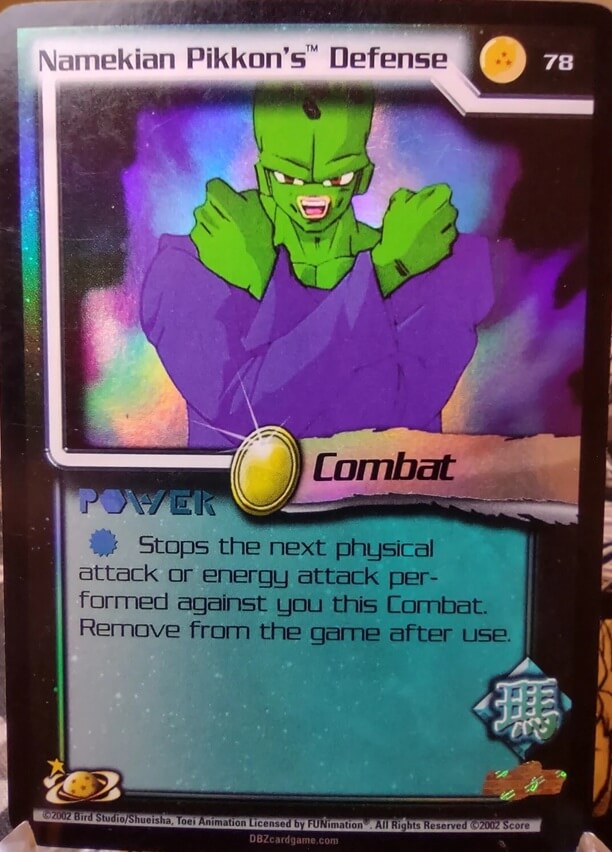 Namekian Pikkon’s Defense
View card ↗
Score · No. 78
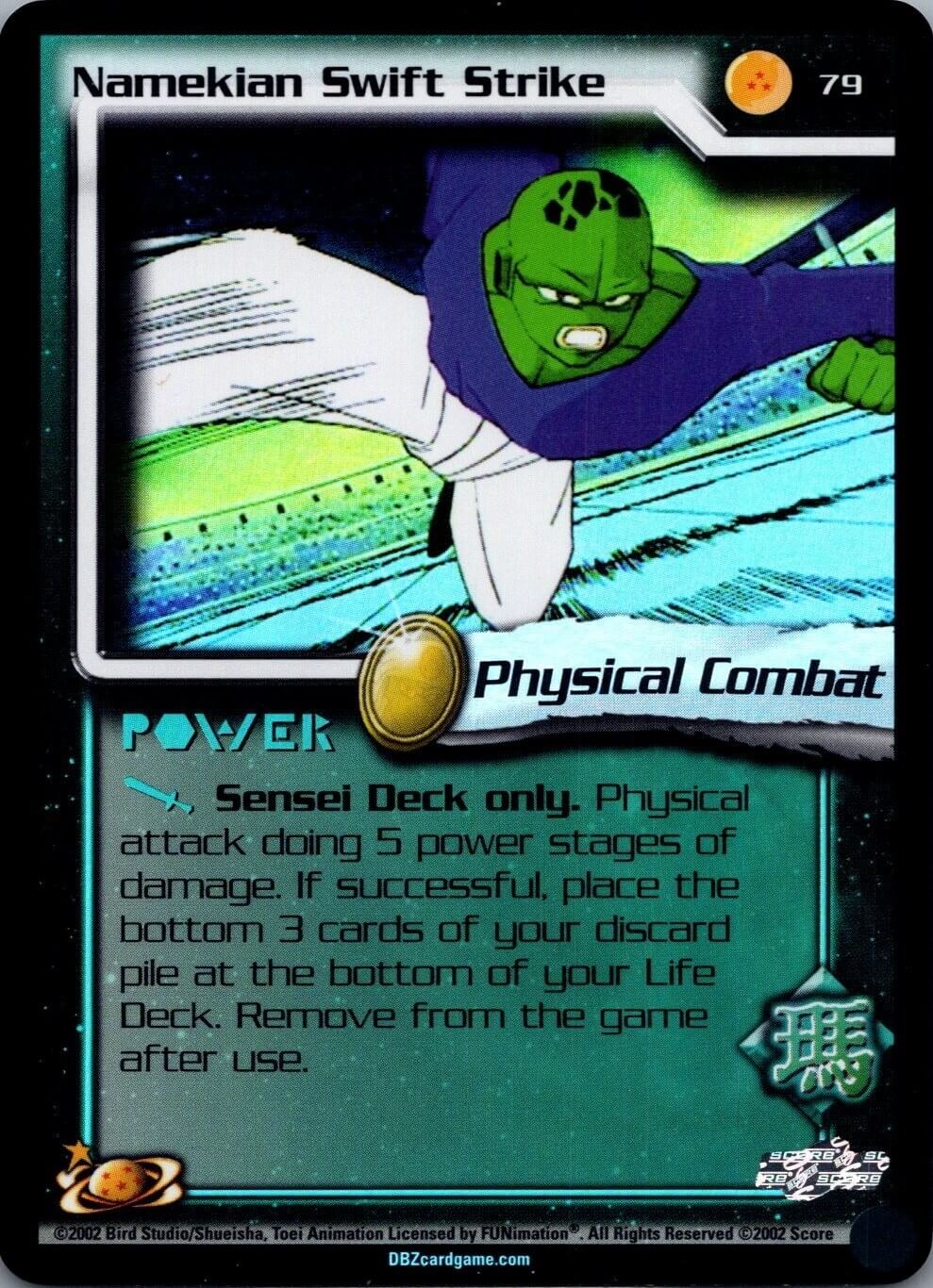 Namekian Swift Strike
View card ↗
Score · No. 79
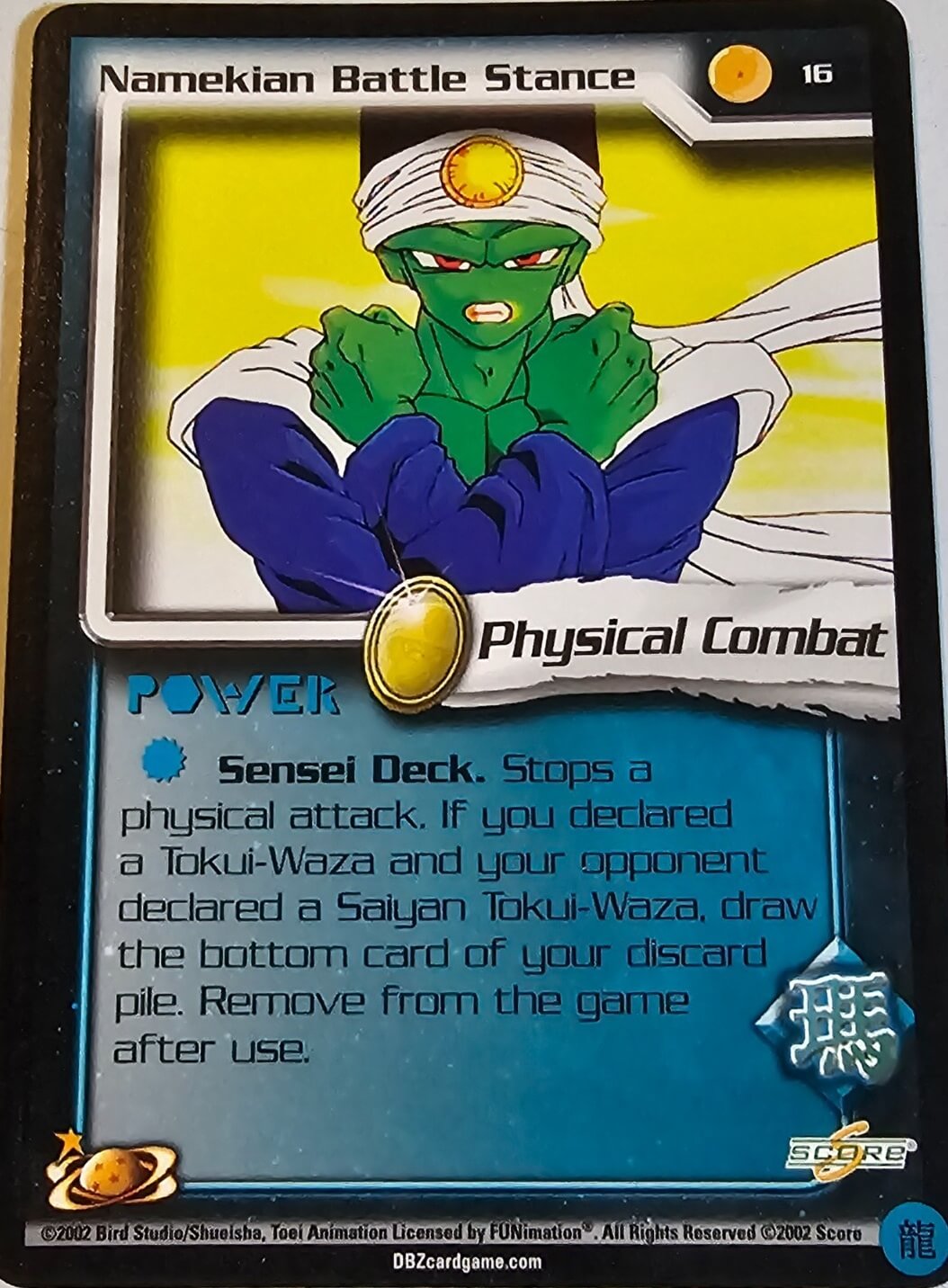 Namekian Battle Stance
View card ↗
Score · No. 16
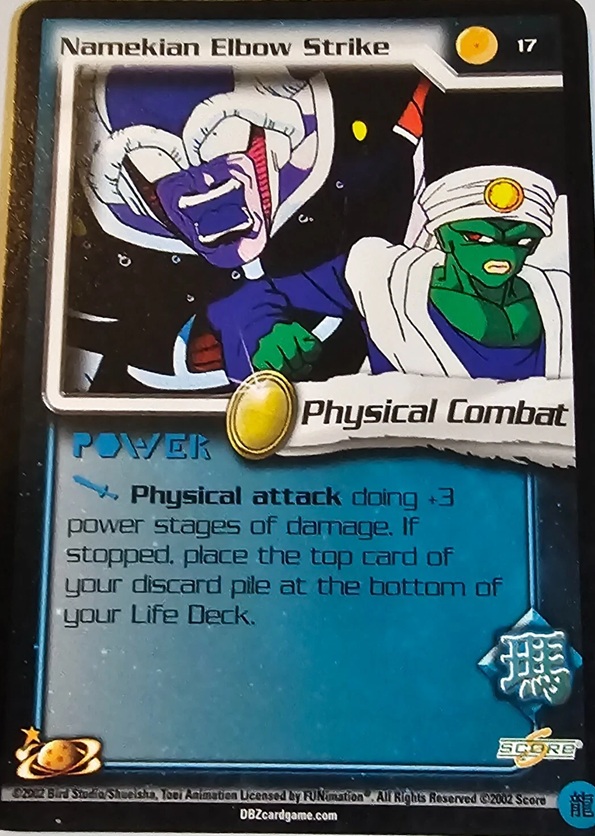 Namekian Elbow Strike
View card ↗
Score · No. 17
This archive is corroborative, not the foundation. A style rule and a biological designation are different kinds of evidence.
Stop treating the missing noun
as if it erases the character.
We are not arguing that every green fighter belongs to the same people. We are arguing that this fighter’s specific creative reference deserves to mean something. The Piccolo connection is in the production account and official character coverage; it is not an invention of this website.[1][2]
Nor does the Namekian reading require the impossible. The manga supplies an off-Namek population history. The Demon King’s offspring supply a warning against rigid anatomical assumptions. The two most familiar categorical objections are not the hard exclusions they are made out to be.[3][4][5]
Pikkon is a Namekian.
The record makes the case.
Not because one isolated detail forces the answer. Because the character, read as a whole, points to it. The Namekian interpretation takes his deliberate Piccolo connection seriously and does not mistake unanswered background questions for evidence against it.
The absence of an explicit species label is the qualification. It is not a command to ignore everything else.
The obvious reading is a Namekian warrior.
Distinctive design. Familiar identity.
Read the sources.
Keep the distinction.
The conclusion above is this site’s argument. The records below are the evidence. Primary publications, official summaries, and an unofficial English transcription are identified separately so that each claim can be checked at its actual source.
TV Anime Guide: Dragon Ball Z Son Goku Densetsu, p. 136
Shueisha, 2003. The “Akira Toriyama Anime Design Collection” caption identifies Pikkon as Piccolo-type and describes an expression-reference memo in the anime production materials.
Read the English transcription ↗The linked English rendering is a community transcription/translation, not an official English edition. The original page image has not been independently verified for this edition. The description is the guidebook caption’s account of the design and production memo, not a handwritten species label.
Weekly Character Showcase #17: Paikuhan
The official profile documents the Piccolo comparison, the weighted-uniform reveal, West Galaxy affiliation, and the anime debut in episode 195.
Official English page ↗Japanese page ↗Dragon Ball Super, chapter 69 — Muri on Namekian migration
Reproduced in the official Namek Editorial on Monaito. The panel establishes off-Namek settlement; the article distinguishes Namekian identity from residence on Planet Namek.
Read the official article ↗Inspect the Japanese panel ↗The displayed English excerpt follows the official website’s rendering. The manga supplies the population-history precedent used to answer the geographic objection.
Weekly Character Showcase #146: Cymbal
Includes chapter 137 images of Cymbal’s creation and describes his dragonlike form. The point used here is his origin in Piccolo Daimaō’s reproductive process, not a claim that all Namekians have the same anatomy.
Read the official profile ↗Weekly Character Showcase #100: Tambourine
Describes Tambourine being produced in an egg by Piccolo Daimaō and identifies his Demon Clan affiliation. The distinction between origin and standard appearance is central to the anatomy argument.
Read the official profile ↗Weekly Character Showcase #147: Piano
Identifies Piano as Piccolo Daimaō’s Demon Clan advisor and explicitly notes his pterodactyl-like appearance. Documents the distinctive appearance used in the comparison gallery.
Read the official profile ↗Namek Editorial: Super Warrior Sticker Wafers
Official coverage of the Demon King, his offspring, and Piccolo. Its discussion of the Cell-era Piccolo sticker specifically describes the turban-and-cape removal before battle—the visual motif compared with Pikkon.
Read the official feature ↗Four Score DBZ collectible cards featuring Pikkon
The images show the printed titles and character art directly. They establish Namekian-style presentation. They do not independently establish biological ancestry.
Return to the original card gallery ↑Score DBZ CCG rules, printed pp. 46 and 52
Page 46 permits Pikkon’s Namekian Tokui-Waza. Page 52 states the separate Namekian Heritage restriction and excludes him. Both provisions must be read together; this site uses the cards as an association, not a rules-based ancestry certificate.
Tokui-Waza rule ↗Heritage restriction ↗